


Want to feel like a rockstar? Launch a successful Kickstarter campaign.
It takes months to make a worthwhile product and many more to build an audience. Then after so much patience and hard work comes launch day, and most of the funds come in within a few days, or even hours. It’s a real rush.
But the rush is quickly followed by the cold realization that every single backer needs to receive their reward, which can be difficult to arrange.
Shipping and fulfillment do not need to be hard, though. By following these seven steps, you can ship your rewards to your backers with a minimum hassle.
In this post, we’ll talk about how Kickstarter shipping works, Kickstarter shipping costs, and Kickstarter shipping companies. (And yes, you can apply this information to Indiegogo, Gamefound, and other popular crowdfunding platforms too!)
A quick note – it’s best to figure out shipping and fulfillment prior to your campaign’s launch. However, if you’ve successfully funded your campaign and plan to collect additional funds for shipping in a post-campaign pledge manager, this guide will still help.
1. Get an Accurate Estimate of the Dimensions and Weight of Your Rewards.
Whether you collect the cost of shipping before or after your campaign, one thing will remain the same – you want the shipping cost to be as low as possible. This will save both you and your backers money after all.. But all shipping costs—regardless of whether you use the US Postal Service, UPS, FedEx, DHL, or something else—depend on the size and weight of the packages you’re sending.
Weigh & Measure Product (Without Shipping Box)
That means you will need to figure out how much your product weighs and how big it is as early in the manufacturing process as possible.
I recommend grabbing a tape measure, like this one from Amazon, and a scale like this one that will help you determine these two variables. 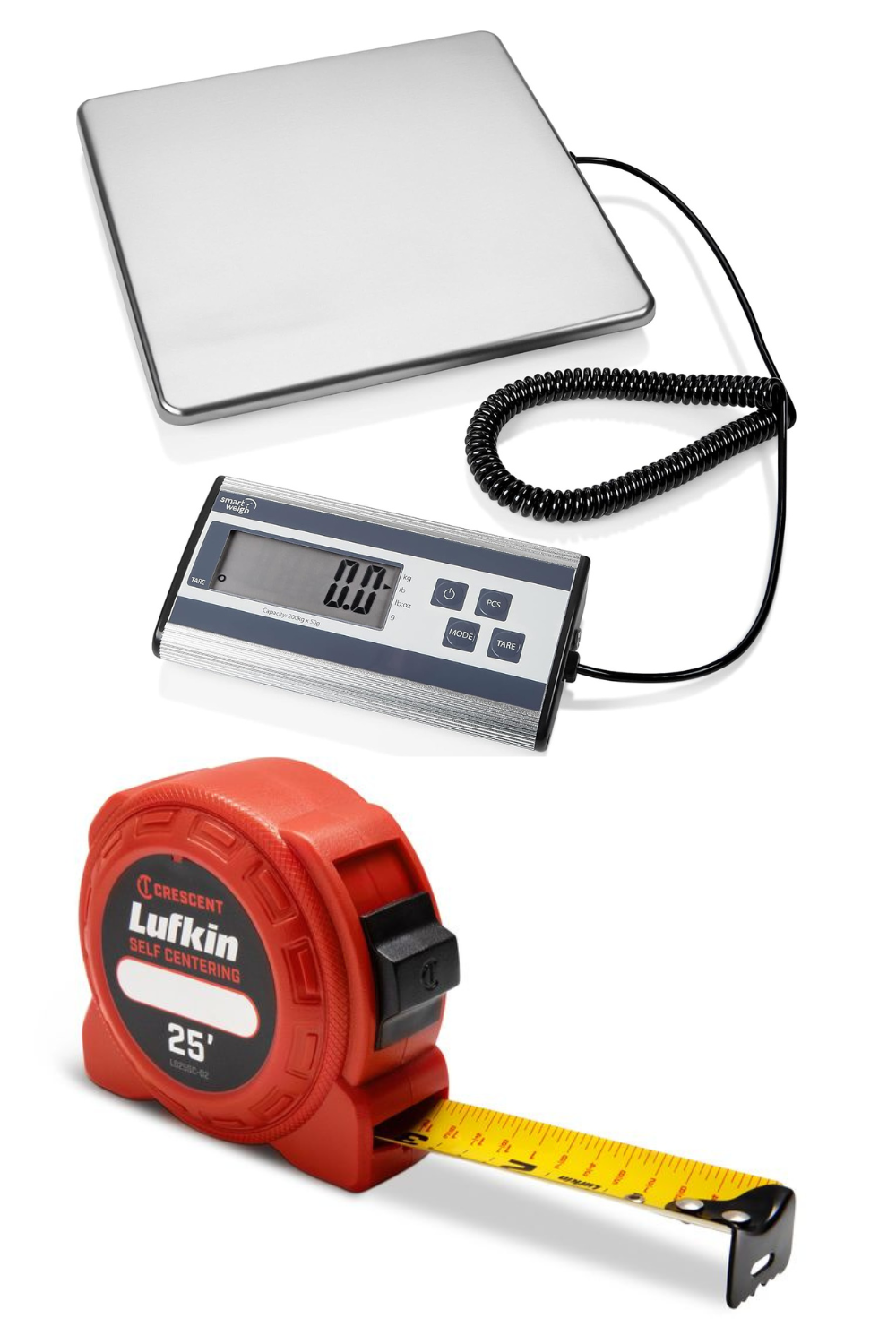 Set one of your products on the floor or the kitchen table, and get to work measuring and weighing! I would recommend recording this in an Excel or Google sheet file for later use.
Once you figure out how large your product is, you will need to determine how big the packages you will be sending will be.
For example, if you sell something that needs to go into a box, the box will inevitably be at least a little bigger than the product itself, if only by half an inch in each direction.
Weigh & Measure Product WITH Shipping Box & Materials
As for the weight of your rewards, you’ll also need to account for the weight of the box or bag the items are being shipped in, as well as the weight of cushioning materials like bubble wrap.
Take your trusty measuring tape and scale, and get to work. You’ll want to record these answers in a Google Sheet or Excel file.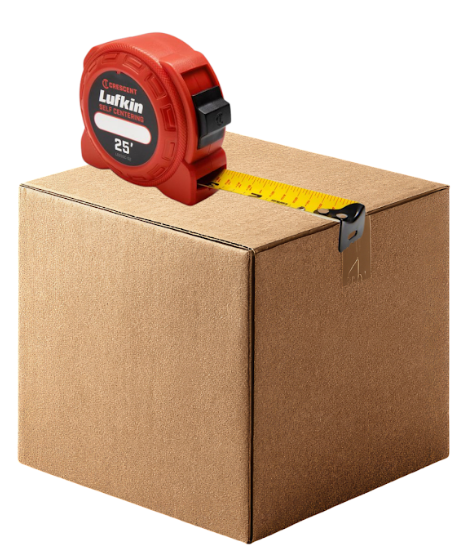 After considering these different factors, you should have a pretty accurate estimate of the dimensions and weight of your rewards for shipping.
You can then use that to arrive at accurate estimates on postage costs.
2. Shop for a Third-Party Fulfillment Center.
If you want to ship Kickstarter rewards efficiently, it’s a good idea to hire a third-party fulfillment center. While you are able to ship rewards on your own, professional companies are able to do so faster and often less expensively, too.
Picking a fulfillment center is a big enough process to warrant a guide of its own. Read more about that here. Here are the basic steps:
- Research Kickstarter order fulfillment centers and create a list of companies to research further.
- Review each fulfillment center’s reviews and make a list of the ones with good reputations.
- Estimate the amount of rewards you plan to ship and where you expect your backers will be located.
- Request a quote from the fulfillment centers you like. Be sure to provide information on the number of rewards to be shipped, the location of backers, and reward dimensions and weight.
- Choose fulfillment centers based on multiple criteria, including service quality, consistency, customer service, cost, and online reviews.
By going through this process, you will have a chance to evaluate each fulfillment center’s prices, as well as their communication and their ability to serve your specific campaign’s needs.
From here, you may choose to use one fulfillment center for all your needs or multiple to serve different parts of the world. It depends on the scope of your campaign.
3. Obtain Realistic Shipping Prices.
Once you choose one or more third-party fulfillment centers, a couple of things will fall into place.
First, you will be able to provide accurate shipping prices that account for the labor, postage, and supplies needed to ship your rewards to different regions.
Second, you will know exactly who is going to be receiving the rewards, packing them into boxes, and sending them to backers.
That first point is key here. It is best to provide shipping rates to backers prior to your campaign’s launch so they can make an informed decision about whether to back your campaign.
By obtaining price sheets from fulfillment centers early, you can both post accurate shipping rates on your campaign page and use them when calculating the cost to fulfill your campaign.
4. Book Freight – Get the Products to the Fulfillment Warehouse.
Having a good fulfillment partner makes shipping Kickstarter rewards a lot easier. After all, once the fulfillment center has the goods in their warehouse, all you need to do is tell them where the items need to go.
Of course, before the fulfillment center can ship rewards, you need to coordinate the transfer of the bulk rewards from the manufacturer to the warehouse. That will involve freight shipping.
Freight shipping methods include:
- Air (plane)
- Sea (boat)
- Land (large truck)
You may also be doing “multimodal” which involves using different transportation methods across multiple terrains.
For example, getting the products via ship onto a dock in the USA and then having them transported via truck to a fulfillment warehouse.
There are a lot of different ways you can book freight, but the easiest that we know of is to use Freightos. Freightos is a freight marketplace that lets you book freight shipments in the same way that Expedia lets you book hotels.
Freightos will collect information about the origin and destination of the goods you need to send, as well as the weight, size, and contents of the shipment. After collecting this information, Freightos will give you options to ship by air or by sea, and you can choose an option that fits your timetable and budget.
It should be noted that selecting a fulfillment center first allows you to provide complete information to Freightos (or any other broker, online or offline) and get an accurate quote on how much it will cost to get items there.
Once you book a shipment, the freight company will do the work from there. You only need to notify your manufacturer and fulfillment center that you booked the shipment— pretty easy!
How do I handle tariffs for my Kickstarter campaign?
One major part of the freight process is customs clearance. That is, making sure goods are clear to be imported from one country to another. This involves safety inspections, payment of customs duties (or tariffs), and a lot of paperwork.
US trade policy changed a lot in the year 2025. If you intend to import goods into the US, you will almost certainly need to pay tariffs. This is true even if you are importing less than $800 of product because of the recent removal of the de minimis exemption (which previously let low-value shipments flow into the US without incurring tariffs).
The amount of tariffs you will need to pay depend on where the goods are coming from, where they are going to, and the type of goods they are (specifically, their HS codes). For rough estimation purposes, SimplyDuty is an excellent online calculator.
But if you are serious about importing goods into the US, we strongly recommend you contact a freight and customers broker to do so. To find recommendations on who to work with, talk to your order fulfillment center and ask them who they like working with.
5. Send Shipping Info to the Fulfillment Center.
Shortly before your shipment arrives, you will need to send all backer information to your fulfillment center of choice. This will involve a few steps.
First, you will need to collect addresses and—in the case of international shipments—phone numbers from your backers. You can do this directly through Kickstarter or a pledge manager such as BackerKit.
Second, you will need to send address and order information to your fulfillment center in a format they can use. Many fulfillment centers will integrate directly with popular pledge managers, and you only need to set them up.
However, in some cases, you may need to create a CSV file. If this is the case, ask your fulfillment center for their template, and fill it out with:
- Backer addresses
- Items ordered
- Quantity ordered
Once your fulfillment center has the required information, order fulfillment will start shortly after the bulk shipment is received.
And if you want more information on which particular Kickstarter shipping companies to choose, check out this article to learn more about your options.
6. Deliver Rewards to Backers.
This is a relatively easy step! If an order fulfillment center is handling your rewards for you, they will take the items out of storage, place them in shipping boxes or bags, and apply postage. You don’t have to stress much during this stage.
Your main responsibility at this point will be to provide the fulfillment center with any additional information they may need.
For example, if they need more information from certain backers to be able to ship, your responsibility will be to collect that information. You may also receive a question or two about how items ought to be packed, and you will need to respond in a timely manner.
If you are shipping particularly valuable items, you may ask your fulfillment center to use parcel insurance. That way, if packages are lost or damaged in transit, you can file a claim with the postal carrier and receive reimbursement. This is purely optional, though, and is most useful when you’re shipping expensive or fragile items.
But beyond that, you will be able to spend at least a week or two appreciating backers as they take photos of the rewards they received and post them online!
7. Address Customer Service Inquiries & Returns.
After the initial week or two of order fulfillment, some issues will inevitably come up. A small percentage of items will be damaged in the mail, and a small percentage of orders will be lost entirely. This is going to be the case regardless of which fulfillment center you choose and would even happen if you shipped all items yourself!
At this point, your primary responsibility will be to handle customer service for returns, damages, and lost packages. In the event of damages or lost packages, we recommend shipping new items entirely. (For expensive items, this is where parcel insurance will come in handy.)
Returns are a little different for each fulfillment center, but most have a process that allows recipients to print their own return label. Ask your fulfillment center ahead of time what the returns process is. If given the option, pay for the return label on your backer’s behalf to ensure a good experience.
Final Thoughts
Shipping Kickstarter rewards can seem intimidating. It doesn’t have to be that way, though. By following these steps, you can put systems in place that will allow you to easily and cost-effectively ship rewards to your backers.
Plan ahead, and you’ll be able to truly relax once your campaign is funded. The only thing you’ll need to worry about is what to launch next!
Additional Resources
A lot of crowdfunding shipping and fulfillment comes down to cost estimation. So below, you will find some of our favorite online tools for calculating costs.
- Go to PirateShip.com
- Use their Rate Calculator.
- Enter origin and destination ZIP code, package dimensions, and weight.
- Instantly see shipping costs for USPS and UPS (often at discounted rates).
- Type “shipping calculator” in the eBay search bar.
- Select the Customer Service result that appears in the dropdown.
- Enter the same info (ZIPs, dimensions, weight) to estimate rates.
- Calculate shipping rates from multiple carriers: UPS, USPS, FedEx, Sendle, and DHL.
Stamps.com or Shippo
- Alternative label platforms that let you input package details and compare prices across carriers.
- An excellent resource for estimating customs clearance and/or tariff costs.
- An online marketplace that you can use to book freight and find customs brokers.
- Their system allows you to see up-to-date freight quote estimates for free.
At Fulfillrite, we’re one of the top Kickstarter fulfillment centers in the world. We’ve been in business since 2010 and have been shipping crowdfunding orders for almost as long as Kickstarter itself has existed.
Good order fulfillment can make a huge difference in the success of your campaign, and your business, in general. But don’t take our word for it: see the video below to learn why Lynnette Kelley has used our services for over 10 years and for more than 70 Kickstarter campaigns.
So if the idea of shipping out your Kickstarter orders has you worried, reach out today and we’ll give you a custom quote. It’s completely free, and if nothing else, you’ll get some great info on pricing.
And if you’re not quite ready for that, here’s a free guide on everything you need to know before you launch your Kickstarter campaign.
 Brandon Rollins, MBA, is the Director of Marketing at Fulfillrite. He typically writes about how eCommerce and crowdfunding brands can manufacture, freight ship, and fulfill products, as well as scale their businesses. You can find his work featured on Kickstarter.com, CrowdCrux, Retailbound, and Launchboom. He has been quoted in CMSWire, Quartz, Whatagraph, Atlassian, and TechRound.


